ServicesWindow Replacement
Window Replacement in Murphy, TX
We replace drafty, fogged and hard-to-operate windows with new units built to your measurements, then set, flashed and sealed against wind-driven rain. Once they are in, we come back to check the work and show you how to care for the frames, tracks and weep holes.
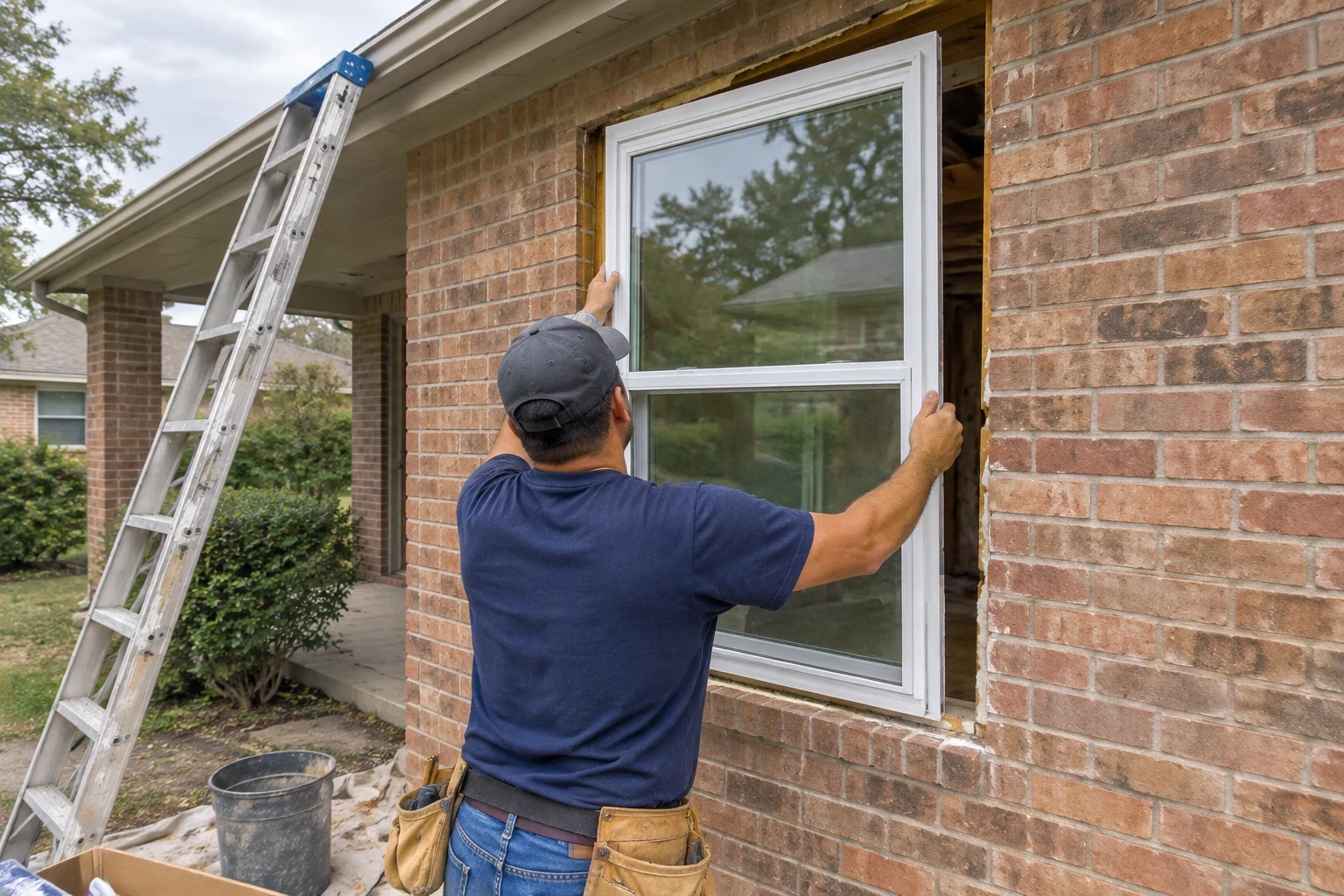
When replacing a window makes sense
Several parts work together in a window: the insulated glass unit, the frame, the sash, the balances or rollers that let the sash move, and the seal where the frame meets your wall. When the glass seal breaks, the frame bends, or the sash stops closing and locking firmly, a new unit is the repair that holds up. We measure each opening and tell you whether it calls for an insert or a full-frame install, then hand you a written quote with every window listed.
Lots of houses near Murphy still have the aluminum or early vinyl windows the builder put in. Aluminum lets heat pass right through the frame, so on a long summer afternoon it turns hot to the touch and the AC has to run longer. Vinyl or composite frames with Low-E glass slow that heat at both the frame and the pane.
We are not done once the sealant cures. After the install we set up a visit to look at the caulk lines, try the locks and answer whatever questions come up after some time with the new windows.
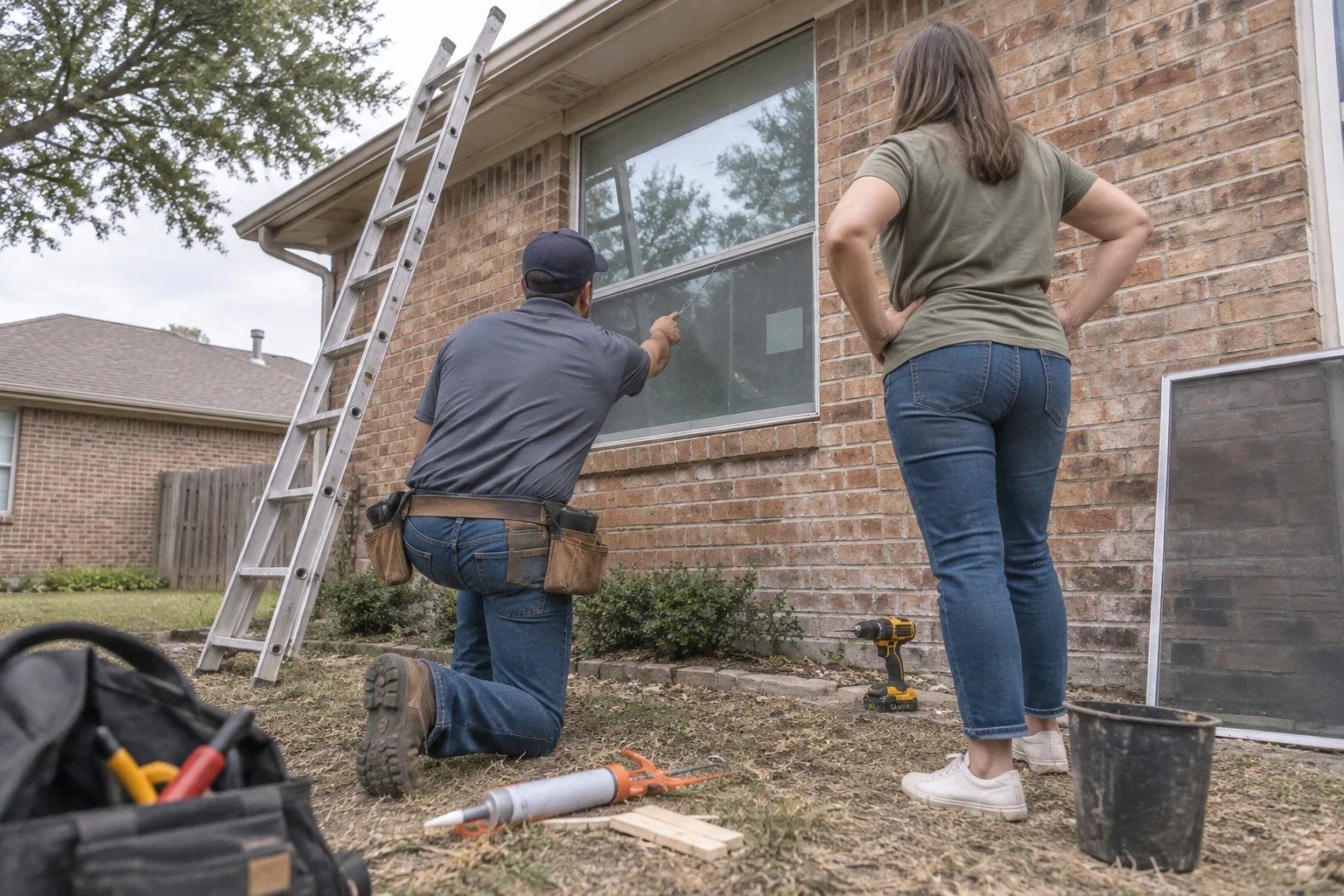
What a window replacement includes
- 01
Measuring every opening
We measure width and height at three points and check each opening for square. Those numbers decide whether an insert will sit true or whether the old frame has to come out.
- 02
Removing the old units
We remove the old sash and stops, and for full-frame work the frame itself. We haul the old glass and frames away.
- 03
Setting, shimming and insulating
Each new unit is set level and plumb on shims. The gap around it is filled with low-expansion foam, which insulates without bowing the frame and binding the sash.
- 04
Flashing and exterior sealing
Flashing directs water outward at the sill and head. The exterior perimeter gets a sealant that stays flexible through summer heat and winter cold, so the joint does not crack open as the frame expands and contracts.
- 05
Glass and frame options
We explain Low-E coatings, argon gas fill, and tempered glass where code requires it, such as near doors and tubs. We also compare frame materials so you know what each one does before you choose.
- 06
Follow-up visit and care guide
We return once the windows have been in for a while to check the work. You also get a short care guide covering how to clear weep holes, clean the tracks, and which cleaners are safe on vinyl frames and coated glass.
Questions about Window Replacement?
Call(972) 962-9846Signs your windows are ready to be replaced
Fog inside the glass unit
A milky film or moisture trapped within a double-pane unit tells you the edge seal has given out. The argon or dry air that insulated the space has leaked, and humid air has taken its place. No amount of cleaning can reach it.
Drafts with the sash closed
If you feel air at a closed and locked window, the weatherstripping is compressed or the frame has warped. Either way, the sash no longer seals against it.
Sashes that stick or drop
A single-hung sash that will not stay up usually has worn balances. One that binds may be out of square because the house has settled, which the shifting clay soil in this area can cause over the years.
Hot frames and hot rooms
Single-pane glass and uninsulated aluminum frames pass heat straight indoors. Rooms on the west and south sides feel it first.
Stains or soft wood at the sill
Water marks on drywall or soft wood below a window point to a failed exterior seal or missing flashing. We check the framing when the old unit comes out.
How a window replacement job runs
- 1
Free in-person consultation
We look at each window inside and out, measure the openings, and go over frame and glass choices. You get a written quote with every window listed. We also explain the $0 down on the whole project and the 0% financing options.
- 2
Custom build and install date
The factory makes each unit to the dimensions recorded at your consultation. We give you the expected lead time and pick an install day that fits your schedule.
- 3
Install day
Floors and furniture near each window get covered first. We finish one window before opening the next, which keeps the inside of your home closed up for most of the day. Our crew is fully insured. Each unit is set, foamed, flashed, sealed and trimmed, and before we leave we clean up, peel the labels, and show you how every window operates and locks.
- 4
The check-back visit
Once the new windows have been through some weather, we return to inspect the sealant, test operation, and walk you through basic care.
Where the cost of new windows comes from
We price the openings in your house, not an average per window, which is why two homes with matching window counts can land at different numbers. The written quote puts each window and each option on a separate line so you can see where every dollar goes. To spread the cost out, ask about $0 down on the whole project and 0% financing options.
- How many windows, and how big
- Each added opening or larger unit adds material and time on site. Big picture windows also call for thicker, heavier glass.
- Insert or full-frame
- With an insert, the old frame stays: we take out the old sash and stops and set the new window inside, so labor stays lower. Full-frame work takes the opening down to the rough framing. It costs more, but it gives us the chance to renew the flashing and insulation hidden behind the old frame.
- Glass and frame choices
- Low-E coatings, argon fill, tempered or obscure glass, and picking vinyl or a different frame material all move the price of each unit.
- What the old window was hiding
- When the old unit comes out and we find a rotted sill or water damage, we photograph it, explain the fix and do no extra work until you approve it.
- Hard-to-reach spots and custom shapes
- Upstairs windows above flower beds, arched tops and custom shapes need extra equipment or more build time at the factory.
Common questions about new windows
Do I have to replace every window at once?
No. Plenty of homeowners begin with the windows in the worst shape, often on the west side, and handle the others later. We record the style and color of the first batch so the next ones match.
Could the install damage my brick or drywall?
An insert install does not touch the brick outside or the drywall inside. A full-frame job can mean taking off and reinstalling interior trim. If the casing or brick mold needs work, you hear about it at the consultation, before we order anything.
Is there a warranty on the windows?
Yes, a limited lifetime warranty on labor and product. If you sell the house, it passes to the new owner. We cover what it includes when we review your quote.
What is the point of the return visit?
In the weeks after an install, sealant cures and frames settle. Coming back lets us make sure the caulk joints have held and each sash still locks firmly. It is also your chance to bring up anything you noticed after living with the windows.
What care do new windows need?
Make sure the weep holes along the bottom of the frame stay open so water can escape. Vacuum the tracks a few times each year. Wash the glass with mild soap and water, not scouring pads, which can scratch the Low-E coating. We cover all of this face to face at the follow-up.
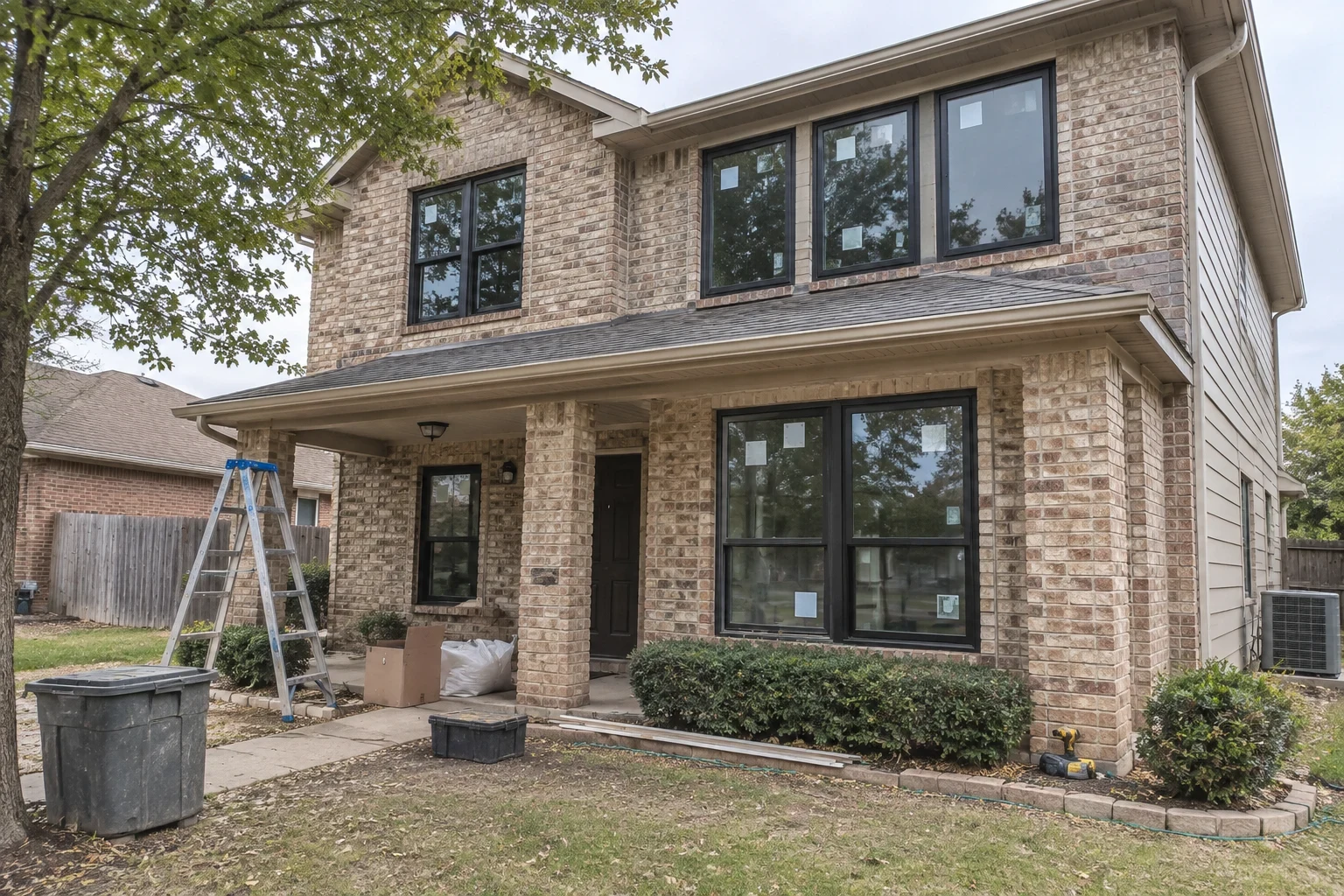
See what new windows would do for your home
We will measure your openings, explain your options, and leave you with a written quote you can compare. Homeowners in Murphy, Wylie, Plano and the surrounding area can set up a visit with one call.