ServicesEntry Doors
Entry Door Replacement for Murphy, TX Homes
When a front door is worn, drafty or hard to close, we swap it for a complete prehung fiberglass or steel unit. We shim it plumb, flash under the sill and add new weatherstripping, then return later to check how it shuts and walk you through its care.
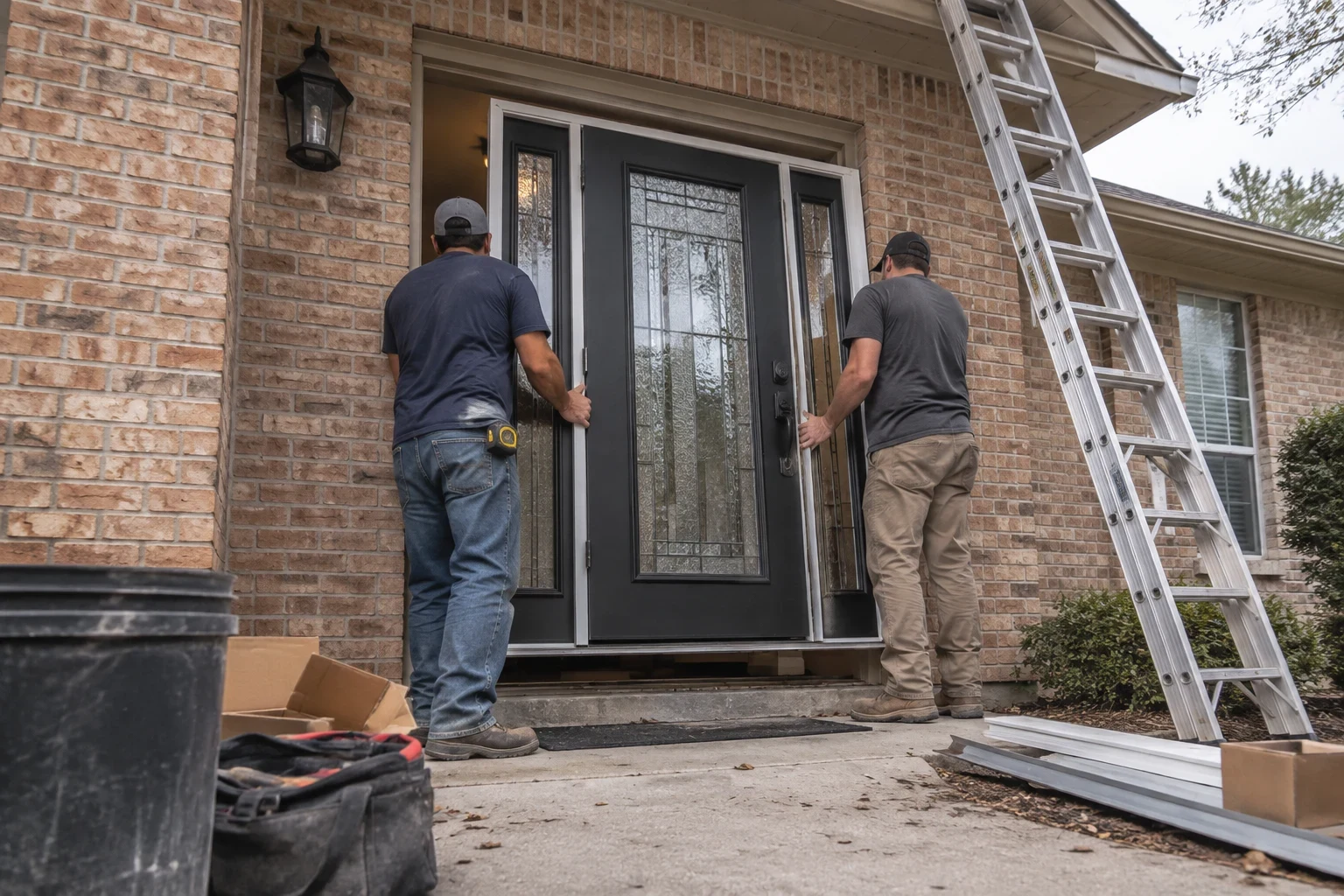
A front door is a system, not just a slab
The door you see is only one part. The frame, the sill, the weatherstripping, the hinges and the lock strike all have to line up. When one of them drifts, the rest start to fail with it. In most cases we replace the whole prehung unit, so you get a new frame, an adjustable sill and new seals along with the door itself.
Most doors we remove tell a similar story. A wood or thin steel slab hangs in a frame that has slowly gone out of square. The expansive clay soil common across North Texas moves foundations a little with each wet and dry season, and that racks door frames. A new unit set on shims, checked for plumb in both directions and screwed through the jambs into the framing closes evenly and latches without a shove.
We don't stop at the last screw. Once your door has been through some heat and a few rain storms, we check back and walk you through simple care for the seals, hinges and finish.
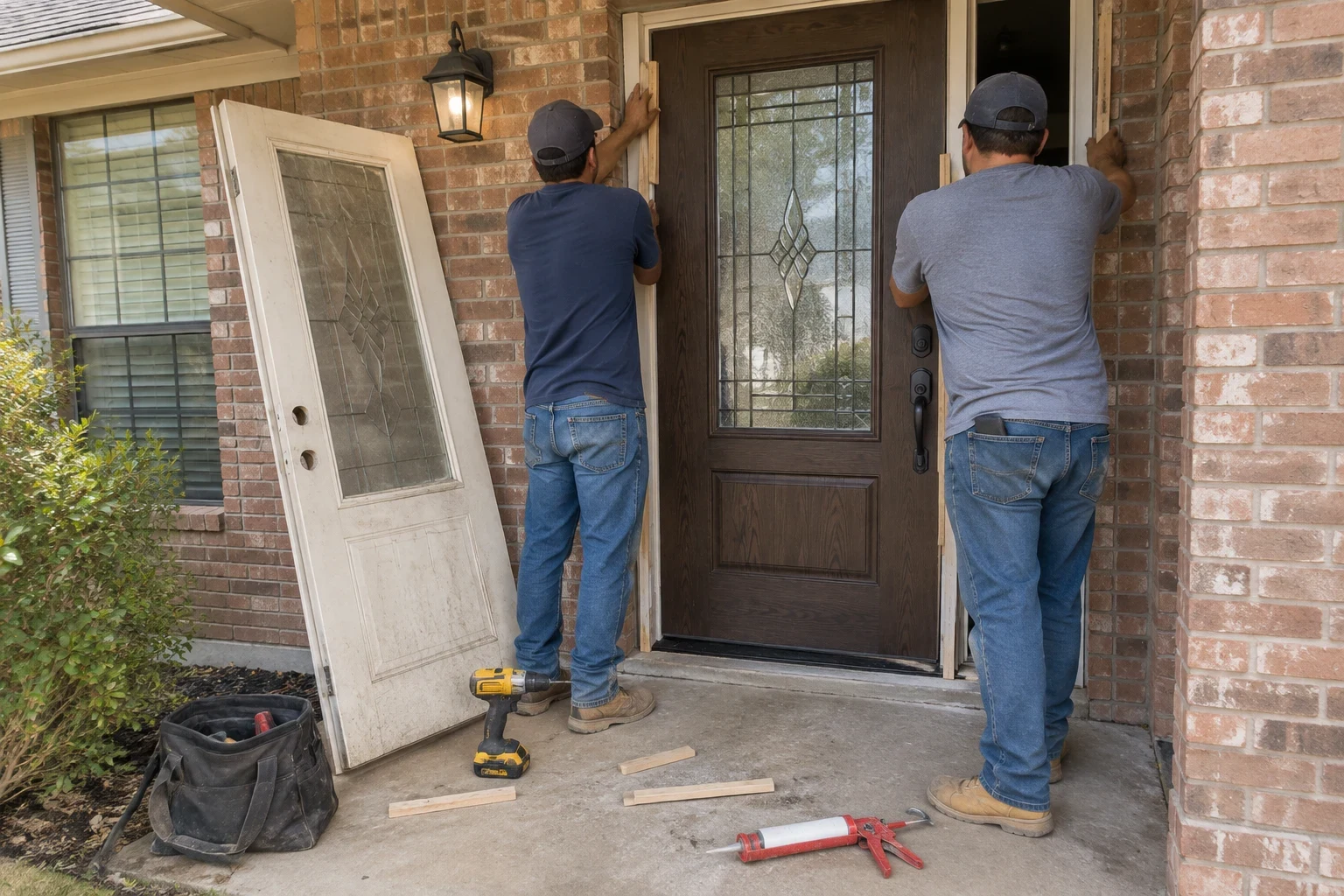
What your entry door replacement includes
- 01
Complete prehung unit
You choose a fiberglass or steel door, with or without glass, sidelights or a transom. It arrives hung in its own frame with a composite sill and brickmold, so the hinge gaps are factory-set before it reaches your home.
- 02
Opening inspection after removal
With the old door out, we check the subfloor and framing at the threshold. Water that got past a failed sill often leaves dark, soft wood there. If we find it, we show you photos and explain the fix before we set anything over it.
- 03
Sill pan and flashing
Rain that gets under a sill wicks into the subfloor and stays there. We set a pan or flashing tape under the sill and lap it so water drains out to the exterior. That way any water that does get in has a way back out.
- 04
Lockset, strike and weatherstripping
We bore and install the handle set and deadbolt and fasten the strike plate with long screws into the wall framing, not just the jamb. Then we adjust the sill and compression weatherstripping until the door seals with an even, light push.
- 05
Trim, sealant and cleanup
Interior casing goes back on and exterior joints get a quality sealant. We carry out the old door and debris and leave the entry swept.
- 06
Check-back visit and care walkthrough
After the door has settled in, we return to recheck the latch, the reveal around the slab and the sweep. We also show you what to clean and lubricate and how often.
Questions about Entry Doors?
Call(972) 962-9846Signs your entry door needs replacing
Light or air around the edges
If you can see daylight at the top corner or feel a draft at the latch side, the frame has moved or the weatherstripping has flattened. Either way, air-conditioned air is leaking out every hour of the summer.
Sticking in the heat, loose in the cold
A wood slab that swells and drags in August, then rattles in January, is absorbing moisture through a worn finish. The seasonal swing loosens joints over time.
A deadbolt you have to push to lock
When the bolt only throws if you lean on the door, the latch and strike no longer line up. That usually means the frame is out of square, and adjusting the strike rarely holds.
Soft or stained wood at the threshold
Dark wood, flaking finish or a spongy feel at the sill means water is getting under the door. The longer it sits, the more subfloor gets involved.
Rust, dents or a cracked skin
Steel doors rust from the bottom edge up once the paint is breached. Cracked or delaminating skins let moisture reach the core, and the insulation inside stops doing its job.
The steps of an entry door job
- 1
Free visit to your home
We measure the rough opening, check how far the frame is out of square and look at the sill and swing. You compare door samples, glass and hardware finishes, then get a written quote that lists each part of the job separately.
- 2
Ordering your door
Every door is built to your size, swing and glass choice. We go over the order with you and schedule the install when the unit arrives.
- 3
Install day
Most single doors are removed, set, sealed and trimmed in one working day. We protect the floor inside the entry and cover the opening whenever we step away. Before we go, we test the lock and seal with you.
- 4
Follow-up check
New doors can shift slightly as they settle, so we come back to adjust the strike, hinges or sweep. On that visit we also go over long-term care.
What sets the price of a new entry door
A door's price comes mostly from its core, its glass and the condition of the opening behind the old frame, not from its curb appeal. Your written quote lists each part of the job separately, so you know every charge before we start. You can also choose $0 Down on the whole project and 0% Financing options.
- Material and glass
- Fiberglass runs higher than steel, but it shrugs off dents and never rusts. Decorative glass, impact glass or blinds sealed between the panes raise the unit price.
- Size and layout
- One 36-inch door is the most straightforward install. Sidelights, a transom, a double door or an 8-foot height all add frame, glass and labor.
- What the opening looks like
- Water-damaged subfloor or framing at the threshold must be repaired before the new sill is set. Often it stays hidden until the old door comes out; if we find it, we explain what we see and wait for your approval first.
- Hardware and finish choices
- Handle sets, multipoint locks and smart deadbolts span a wide price range. A door finished at the factory costs more than a primed one but skips painting at your house.
Common entry door questions
Fiberglass or steel: which one should I choose?
For a door facing west or south that sits in full afternoon sun, fiberglass is the stronger pick: it doesn't dent or rust, and its finish holds up in heat. Steel is very secure and less expensive, though any scratch down to bare metal should be touched up quickly. We bring both to the consultation so you can feel the difference.
Will a new door fit my current opening?
In most cases, since we size the prehung unit to your rough opening. For an odd-sized opening we either order a custom unit or adjust the framing, and you'll know which before anything is ordered.
What care does a new door need?
Keep the sill track free of grit so the sweep doesn't wear, and oil the hinges lightly once or twice a year. Look over the outside sealant every spring and clean the finish with mild soap. We walk through all of it with you at our follow-up visit.
Is the door covered by a warranty?
Yes, a limited lifetime warranty covering both labor and product. It transfers, so a buyer gets the same coverage if you sell the house.
Who's responsible if something goes wrong with the door removed?
We are fully insured, and that coverage extends to your entry for as long as the opening is open. Any time we step away, we cover the opening.
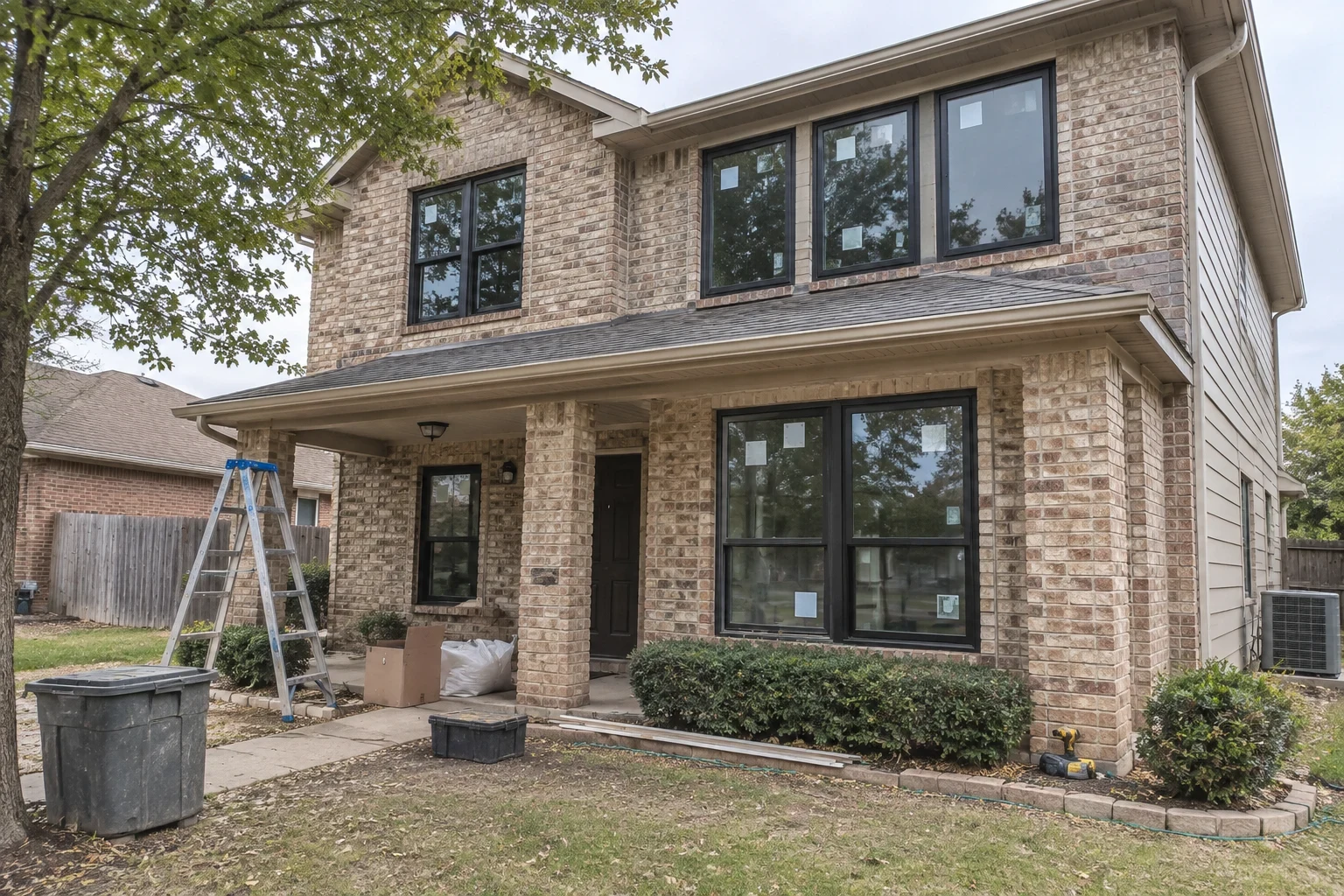
Ready to see what a better front door would look like
We'll measure your opening, bring samples to your home and explain what we'd install and why. The consultation and the quote cost you nothing.